
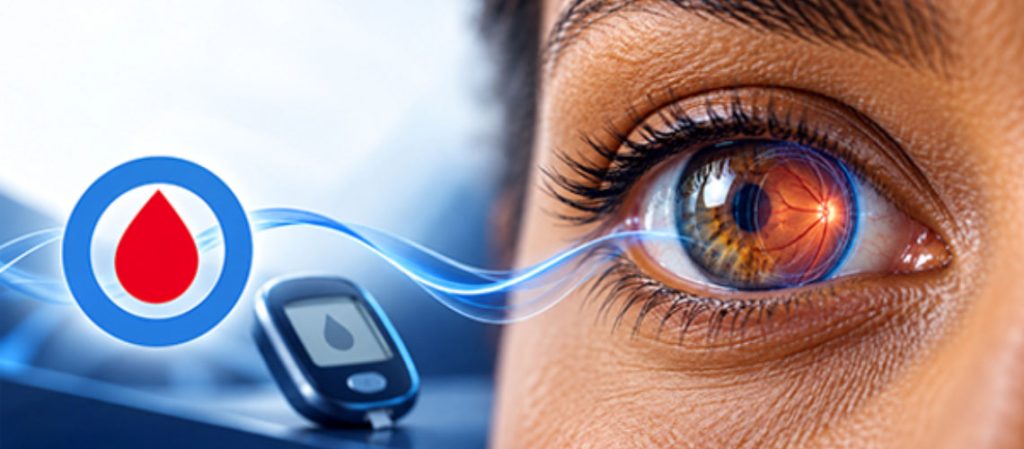
World Diabetes Day is celebrated on 14th November every year to commemorate the birthday of Canadian scientist Sir Frederick Banting. Together with Charles Best, Banting is credited with the discovery of insulin. Their work transformed the outlook for people with diabetes and earned Banting, with John Macleod, the 1923 Nobel Prize in Physiology or Medicine.
Insulin is a natural hormone made by the pancreas that controls the amount of sugar in the blood and keeps blood sugar levels balanced. When you have diabetes, the body either does not produce insulin or is unable to use it effectively to control blood sugar levels. Without enough insulin sugar builds up in the blood, over time leading to diabetes which affects a number of organs in the body, including the eyes.
Blood sugar levels typically tend to fluctuate, rising and falling throughout the day. In a person with diabetes, these fluctuations can occur quickly and can be considerable, affecting the fluid levels and altering the shape of the lens of the eye. This may result in temporarily blurred or fluctuating vision and temporary changes to the prescription of glasses or contact lenses. As blood sugar levels stabilise vision usually returns to normal.

The eyes contain some of the smallest and most delicate blood vessels in the body. These vessels supply oxygen and nutrients to the retina, the light-sensitive tissue at the back of the eye responsible for vision. High blood sugar damages these fragile retinal vessels by reducing blood supply to the retina and by weakening the walls of the blood vessels. When vessels become narrowed or blocked, the retina becomes starved of oxygen and nutrients, triggering the growth of abnormal blood vessels, which can bleed and cause further damage. Weakening of the blood vessels causes them to leak fluid into the retina, leading to swelling of the macula, the central part of the retina responsible for sharp clear vision.
Many of the changes in the retina are quiet and painless and can go unnoticed in the early stages, which means significant damage in the eyes may develop long before symptoms appear, increasing the risk of permanent vision loss if left untreated. As the eye disease progresses and symptoms begin to emerge, warning signs may include blurred, distorted or wavy vision, fluctuating vision, difficulty perceiving colours, dark spots or floaters, flashes of light, or blank areas in the field of vision.

Diabetic eye disease refers to the group of eye conditions that can result from persistent high glucose levels, cholesterol levels and blood pressure. These conditions include diabetic retinopathy, diabetic macular oedema, neovascular glaucoma and early cataract formation. Early detection and management increase the chances of preserving vision and preventing or delaying the progression of the eye disease. Regular eye examinations can help improve treatment outcomes by diagnosing the condition early and monitoring its progress over time. Routine examinations aim to identify rising eye pressure, changes to retinal blood vessels, early macular oedema or cataract development, and signs of systemic conditions, such as high blood pressure.
Treatment for diabetic eye disease depends on the severity and progression of the eye changes. Treatment options include laser therapy, injections to help reduce swelling and improve vision and surgery. Timely intervention can help slow down the progression and preserve vision.

People with diabetes can significantly reduce the risks and impact of diabetic eye disease by taking control of their eye health and adopting certain proactive measures. Keeping blood sugar within normal limits is the single most effective way to protect your vision. In addition to managing glucose levels, healthy lifestyle habits such as regular physical activity and a balanced diet can improve overall diabetes management and eye health. Stop smoking to protect your blood vessels from extra harm. Exposure to the ultraviolet rays of the sun can speed up the progression of cataracts, so wear sunglasses even in cloudy weather. Schedule regular appointments with your optometrist.
World Diabetes Day is a reminder that good diabetes management is about considerably more than watching a number on a glucose meter. So, on 14 November, spare a thought for Frederick Banting and the discovery that changed millions of lives.